Common website mistakes that quietly cost you leads and how to fix them
Your website should be one of your most powerful business tools but only if it’s working properly.
It should attract visitors, build trust, and turn clicks into enquiries. But when key elements are missing or poorly structured, it does the opposite, pushing potential customers away.
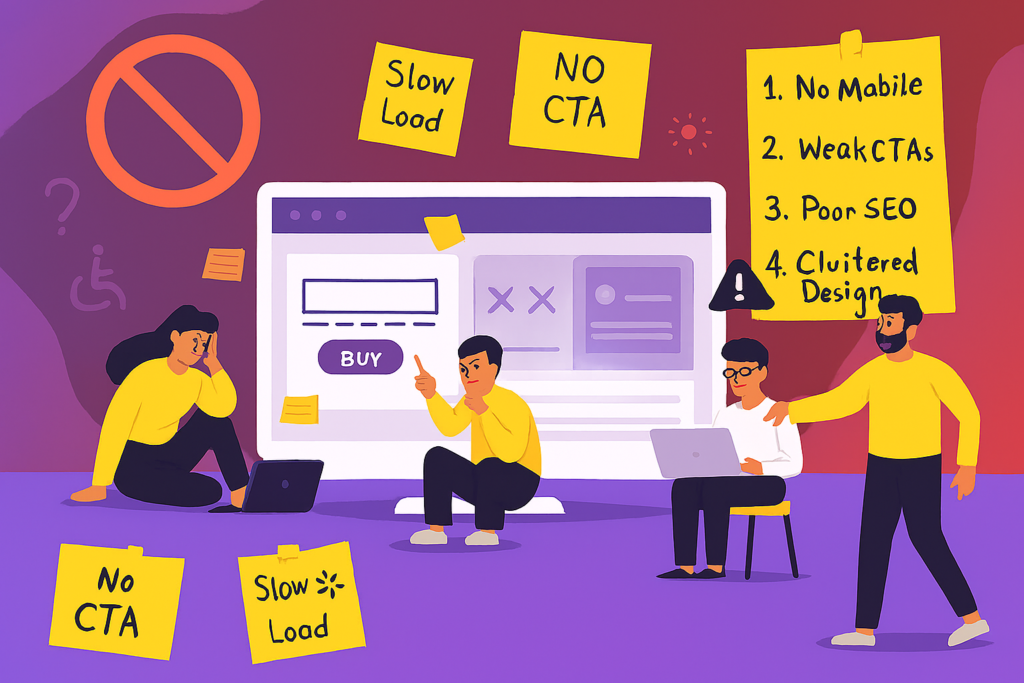
Many businesses don’t realise their website is holding them back. Small issues like slow load times, unclear navigation, or weak calls-to-action can quietly impact performance.
The good news? These problems are fixable.
Here are 10 of the most common website mistakes! What they mean, how they affect your business, and how to fix them.
If you’re unsure whether your website is performing as it should, you can explore our web design services to see how we approach structure, usability, and performance.

Why it hurts: Visitors leave quickly if your site takes too long to load.
Fix it: Optimise images, streamline code, and use reliable hosting to improve speed.
Why it hurts: Over half of website traffic comes from mobile devices.
Fix it: Use responsive design and test your site across different screen sizes.
Why it hurts: Users get frustrated if they can’t find what they need.
Fix it: Simplify menus, use clear labels, and structure content logically.
Most website issues don’t come from one big problem they come from small issues stacking up.
Fixing these early can dramatically improve how your site performs.
Why it hurts: Visitors don’t know what to do next.
Fix it: Add clear, visible actions like “Get a Quote”, “Book a Call”, or “Contact Us”.
Why it hurts: It can make your business look unprofessional or inactive.
Fix it: Refresh layouts, fonts, and visuals to match modern standards.
Why it hurts: Your website won’t show up in search results.
Fix it: Use proper headings, meta descriptions, alt text, and clean URLs.
Why it hurts: Potential customers can’t easily get in touch.
Fix it: Include clear contact details – form, email, phone, and location if relevant.
SEO and structure aren’t things to fix later – they should be built in from the start.
A properly structured website performs better, loads faster, and is easier for users (and search engines) to understand.
Why it hurts: Visitors don’t feel confident choosing your business.
Fix it: Add reviews, testimonials, case studies, or trust badges.
Why it hurts: It damages credibility and user experience.
Fix it: Regularly audit your site and fix broken links or outdated content.
Why it hurts: You can’t measure performance or improve effectively.
Fix it: Use tools like Google Analytics to track user behaviour.
Your website should support your business not work against it.
For businesses in Rushden and across Northamptonshire, fixing these common issues can make a noticeable difference in visibility, enquiries, and overall performance.
Even small issues can impact how your site performs, how users interact with it, and whether they choose to get in touch.
By identifying and fixing these common mistakes, you can improve performance, increase conversions, and create a smoother experience for your visitors.
A well-built website doesn’t just look good it works properly, every day.
Let’s take a look at what’s working and what’s holding your site back.
Looking to improve your website further? These guides break down what works, what doesn’t, and how to get better results.