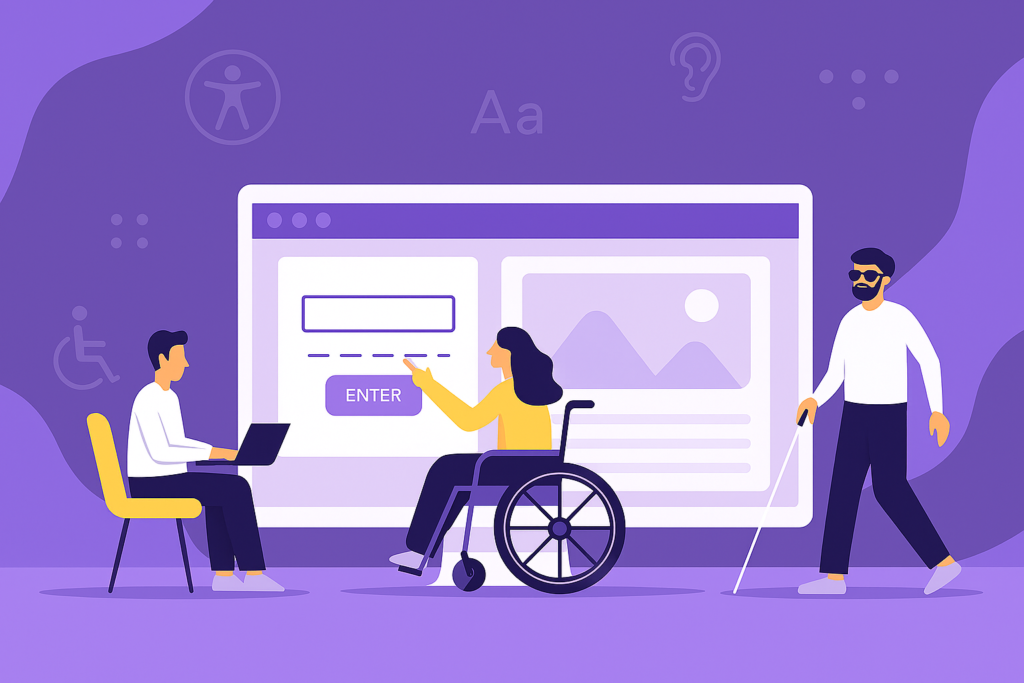
In today’s digital landscape, accessibility is no longer a “nice-to-have” – it’s a must-have. Designing websites that are inclusive and usable for everyone, including people with disabilities, isn’t just about ethics – it’s about smart business.
Here’s why accessibility in web design should be a top priority for every business:
Over 1 billion people globally live with some form of disability. By making your website accessible, you open your business to a wider market and demonstrate inclusivity.
Accessible design often leads to cleaner layouts, better navigation, and clearer content – benefiting all users, not just those with disabilities.
Search engines love accessible websites. Features like alt text, proper heading structure, and readable content improve your site’s visibility and ranking.
Many countries have laws requiring digital accessibility (e.g., ADA in the U.S., Equality Act in the UK). Non-compliance can lead to lawsuits, fines, and reputational damage.

Inclusive design shows that your business cares. Customers are more likely to support brands that prioritize accessibility and social responsibility.
Keyboard-friendly navigation, readable fonts, and clear contrast ratios make your site easier to use for everyone – including older users and those with temporary impairments.
Accessibility standards are evolving. Designing with accessibility in mind ensures your site remains relevant and adaptable to future technologies and regulations.
Accessible design forces clarity, consistency, and simplicity – hallmarks of great UX and UI design.
When users can easily navigate and interact with your site, they’re more likely to take action – whether that’s making a purchase, signing up, or contacting you.
Beyond business benefits, accessibility is about equity. Everyone deserves equal access to information, services, and opportunities online.
Accessibility isn’t just a checkbox – it’s a mindset.
It’s the difference between designing for some and designing for everyone. When you embrace inclusive design, you’re not just ticking off compliance boxes or avoiding legal pitfalls – you’re actively choosing to build digital spaces that welcome, support, and empower all users, regardless of ability.
By investing in accessibility, you’re protecting your business from risk, yes – but more importantly, you’re future-proofing your brand. You’re signalling that your values extend beyond aesthetics and conversion rates. You’re saying: we see you, we hear you, and we’ve built this with you in mind.
Inclusive design leads to better usability, stronger customer trust, and broader reach. It’s not just ethical – it’s smart. And in a world where digital experiences shape real-world outcomes, accessible websites aren’t optional. They’re essential.
SEO, Email, Hosting & Maintenance
Updates, Security Checks & Ongoing Support
Design, Print & Digital
Management, Advice & Support